
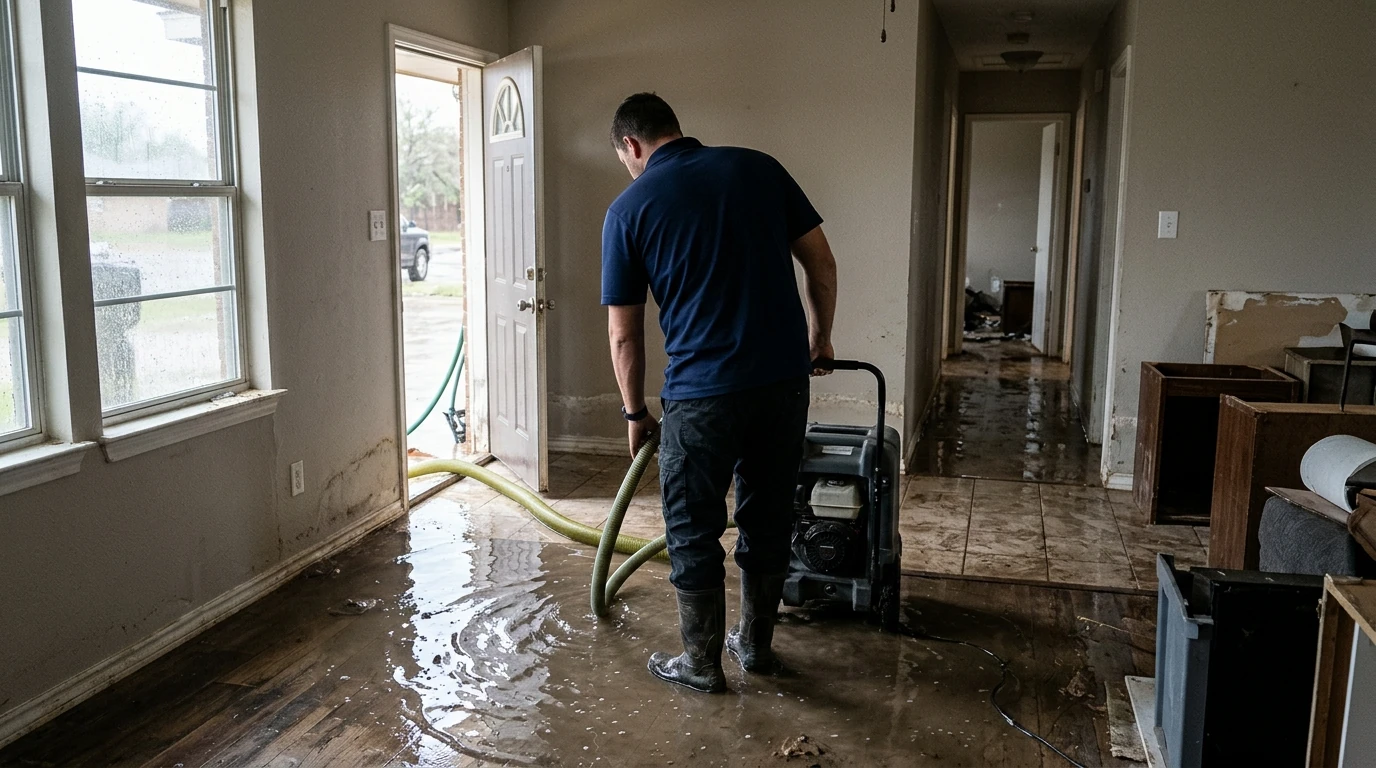
TL;DR: If flash flood water has gotten into your house in Big Spring, TX, shut off electricity at the breaker if you can safely reach it, stay out of the standing water, and call a 24/7 emergency water removal company right away. Floodwater that comes in from outside is treated as Category 3 water, meaning it’s grossly contaminated, so professional extraction and sanitizing is the right next step, not a shop vac and a box fan.
If a West Texas downpour just pushed water under the doors or up through the floor drains at your Big Spring home, the first call matters more than the first mop. For flash flood water in your house, call ACS Enterprise at (432) 847-4704. The crew answers 24/7 and is licensed and insured, which matters here because floodwater carries contamination that a wet-dry vac and open windows won’t solve. Before you dial, there are a few things worth doing in the next five minutes that keep the damage from getting worse.
What should you do before help arrives?
Cut power to any flooded rooms at the breaker panel before you touch anything else, and never do it while standing in water. If the panel itself is wet or you’re not sure which breakers feed the flooded area, leave the power on and wait for a professional.
Don’t wade into moving water or water deeper than your ankles; flash flood water in West Texas can hide open manholes, debris, and downed lines you can’t see. Skip the window AC unit or space heater sitting in standing water, and don’t run a household vacuum on it either. Take photos of the water level and the rooms affected before you move anything. That documentation protects an insurance claim later, and it only takes a minute.
Who do you call first: a plumber, the city, or a restoration company?
Call an emergency water removal and restoration company first when the water came from outside, like a flash flood; that’s a contamination and extraction job, not a plumbing repair. Call 911 or your utility company only if you smell gas, see downed power lines, or hear arcing. Call your insurance agent after mitigation starts, not before, so the loss is already being controlled while the claim gets filed.
A plumber is the right call when the water is actively coming from a pipe, water heater, or supply line inside the home and hasn’t stopped. A flash flood is different: the water’s source is outside the house (a swollen arroyo, street runoff, or a creek like Beals Creek overtopping its banks), so there’s no valve to shut to stop it. That’s a job for extraction equipment and someone who can tell you honestly how far the water traveled into your walls and subfloor.
What happens when you call?
Expect the dispatcher to ask how the water got in, roughly how much area is affected, and whether the power is still on in the flooded rooms. Have your address, a rough timeline, and your insurance company’s name ready if you’ve already been in touch with them.
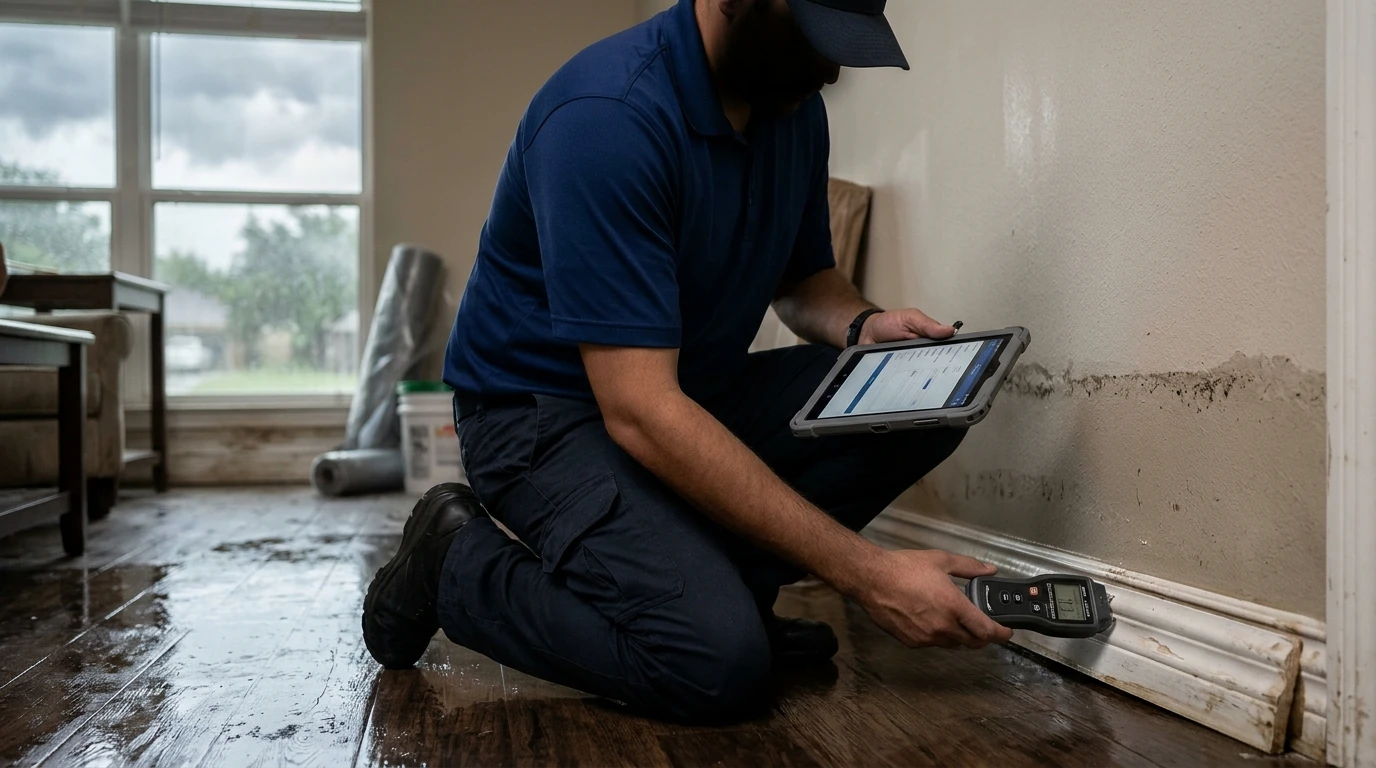
On arrival, a technician checks for electrical and structural hazards first, then starts extraction with truck-mounted or portable pumps. They’ll use a moisture meter to check how far the water traveled behind drywall and under flooring, not just what’s visible on the surface, and set air movers and dehumidifiers once standing water is gone. You should get a written scope of work before anything is torn out, which also becomes part of your insurance documentation.
Is flash flood water actually contaminated?
Yes. Under the ANSI/IICRC S500 water restoration standard, water that floods in from outside, whether it’s street runoff, a creek, or storm surge, is classified as Category 3, the most contaminated tier. It can carry sewage, chemicals, and bacteria picked up as it crossed yards, streets, and storm drains on its way into your house.
That classification is also why a sewage-grade cleanup is often the right scope for flash flood water, not a standard dry-out. Porous materials that soaked in Category 3 water, carpet pad, drywall below the waterline, insulation, usually need to come out rather than be dried in place. If you want more on why that level of contamination isn’t a DIY job, this breakdown of the health risks covers what’s actually in that water and why proper sewage cleanup protocols exist.
Does homeowners insurance cover flash flood water?
Usually not, at least not under a standard homeowners policy. Surface flooding, including flash flood water, is typically excluded from standard homeowners insurance and instead requires a separate flood policy, most often through the National Flood Insurance Program. Check your own policy and talk to your agent, since coverage details vary by insurer and by state; this isn’t a guarantee of what your specific policy pays.
That said, acting fast still matters even if flood coverage is separate. Homeowners generally have a duty to mitigate further damage once water is discovered, and documenting the loss, with photos and a written mitigation scope, helps regardless of which policy ends up paying. The Insurance Information Institute has a plain-language breakdown of how flood exclusions typically work if you want to read your own declarations page with better context.
What should you throw away after floodwater gets in?
Porous items that sat in Category 3 water for more than a few hours are usually not salvageable: carpet and carpet pad, upholstered furniture, mattresses, particleboard furniture, and drywall or insulation below the waterline. Food that touched floodwater, including sealed containers with damaged seals, should be discarded.
Hard, nonporous items like tile, metal, glass, and solid wood furniture can often be cleaned and disinfected rather than replaced. A restoration crew can tell you room by room what’s worth keeping and what isn’t, which saves money compared to guessing and losing something that could have been saved, or keeping something that shouldn’t be.
If flash flood water is sitting in your Big Spring home right now, get in touch to schedule emergency water removal, or review what a typical job looks like on the emergency water removal and water damage restoration pages for this area.
About ACS Enterprise
The company is locally owned and operated out of Midland, TX, serving Big Spring and surrounding West Texas communities since 2019. Its crews handle emergency water removal, water damage restoration, sewage cleanup, storm damage restoration, and related cleanup services, and the business is licensed and insured, with a 5.0 Google rating across 367 reviews as of this writing.
Video Transcript
A flash flood doesn’t knock politely, it rushes under doors and rises fast, turning your Big Spring home into a hazard zone. First, if it’s safe, shut off power at the breaker panel. Never step into water to reach it. Stay out of standing water, it can hide debris, open drains, or downed power lines you can’t see. Snap photos of the water line and damage before you move anything. It protects your insurance claim later. Flash floodwater comes from outside, so there’s no pipe to shut off, that means you need a restoration crew, not a plumber. Call a 24/7 water removal company right away. Floodwater is contaminated, so professional extraction matters more than a shop vac. When they arrive, techs check for hazards, then extract water fast using truck-mounted pumps and moisture meters to track hidden damage. Floodwater is Category 3, grossly contaminated. Soaked carpet, drywall, and insulation usually need to come out, not dry in place. Standard homeowners insurance often excludes flood damage, so check your policy, but fast action and documentation help either way. Don’t wait for water to spread. Call ACS Enterprise at (432) 847-4704 for a free estimate, 24/7.