
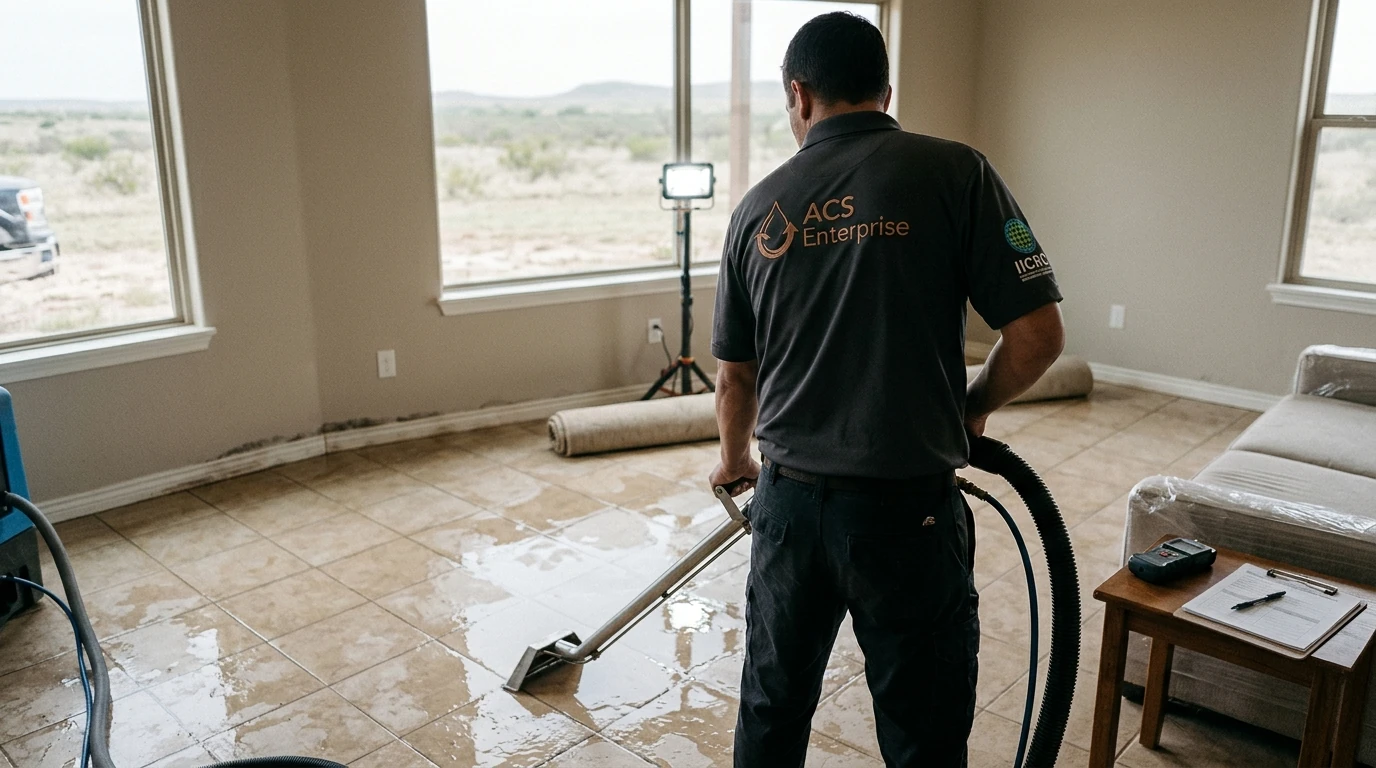
If your floor is still wet from last month’s flash flooding, or a supply line let go overnight, the number you actually need right now is a dollar figure. In Midland, TX, emergency water extraction typically runs $3 to $8 per square foot for clean water, climbing to $7 to $12 per square foot once the water is contaminated gray or black water. A single flooded room of 200 to 400 square feet usually lands between $600 and $3,500 for extraction alone, before structural drying equipment days get added to the invoice.
Midland County’s Office of Emergency Management asked residents to report flood damage after the October 15 flash flooding closed roads and forced water rescues around the city. If that storm, or any sudden water event, is why you’re reading this, the numbers below reflect what extraction specifically costs, separate from full restoration and drying.
What Does Water Extraction Cost in Midland, TX?
Extraction pricing depends mainly on square footage, water category, and how much material has to come out with it. Here’s what the work typically runs in the Midland and Permian Basin market:
| Scenario | Typical Cost |
|---|---|
| Single room, clean water (Category 1), under 300 sq ft | $500 - $1,200 |
| Multiple rooms or whole-floor clean water extraction | $1,500 - $4,000 |
| Gray water (Category 2) extraction with carpet pad removal | $1,800 - $5,000 |
| Black water (Category 3), flash flood or sewer backup | $3,000 - $8,000+ |
| Drying equipment (air movers + dehumidifiers), per day | $150 - $350/day, usually 3 to 5 days |
| After-hours or weekend emergency dispatch | Often an added $150 - $400 flat fee |
These are typical regional ranges, not a quote. Square footage, how long the water sat before anyone called, and what’s underneath the flooring all move the final number.
Why Is Extraction Priced by the Square Foot Instead of the Hour?
Extraction is usually billed per square foot of affected area, not per hour, because the work scales with the area that has to be pulled dry, not the clock. A technician extracting 150 square feet of standing water in a bedroom and one extracting 1,500 square feet across a flooded ground floor are doing fundamentally different-sized jobs, even if both take roughly the same number of hours with the right equipment.
Some crews do bill hourly for small spot jobs (a single closet, a water heater pan overflow). But for anything beyond one room, per-square-foot pricing is the industry norm because it reflects equipment deployed, number of technicians, and extraction passes required, not just time on site.
What Pushes the Price Higher: Water Category, Carpet Pad, and Flood Cuts?
The single biggest cost driver is water category, because it determines how much material can be saved versus how much must be removed. The ANSI/IICRC S500 standard splits water damage into three categories, and the category changes both the labor and the PPE required.
Category 1 (clean water) comes from a sanitary source like a supply line or water heater. It’s the cheapest to extract because carpet, pad, and most drywall can often be dried in place rather than removed. Left untreated, though, clean water can degrade into Category 2 within a day or two.
Category 2 (gray water) carries contamination, think washing machine discharge or groundwater seeping through a foundation under pressure. Carpet pad almost always has to come out at this stage, which adds disposal and material cost.
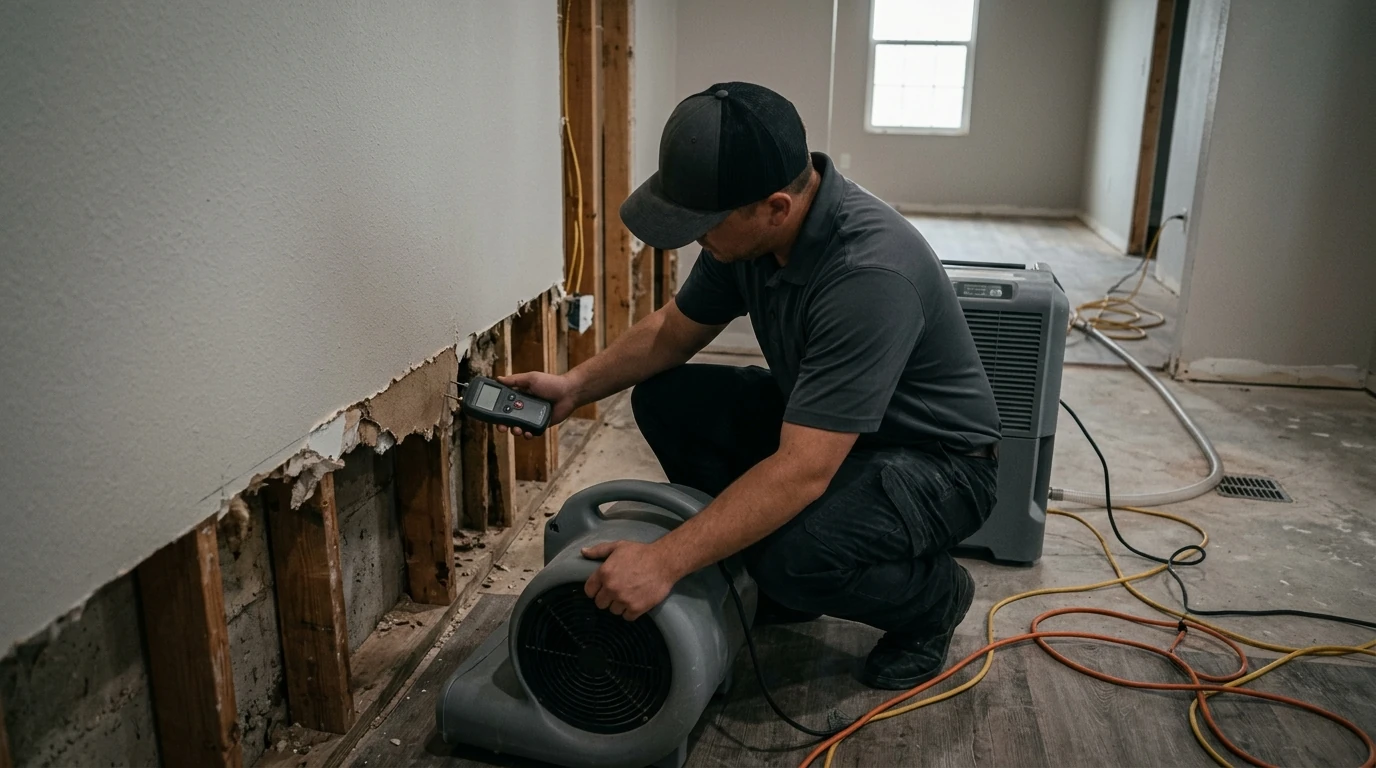
Category 3 (black water) is grossly contaminated: rising floodwater, storm surface water that flowed in from outside, or any backup from a sewer line or drain beyond the trap. This category requires full PPE, antimicrobial treatment, and removal of porous materials like carpet, pad, and often the lower section of drywall (a “flood cut”). That’s why Category 3 extraction runs two to three times the cost of Category 1 work on the same square footage.
Flash flood water that enters a home from outside, which is what much of Midland saw in October, is treated as Category 3 regardless of how clean it looks, because it’s picked up soil, fuel residue, and runoff contaminants on the way in.
Does Insurance Pay for Water Extraction After a Flash Flood in Midland?
Most homeowners insurance policies do not cover rising or wind-driven floodwater that enters from outside the home; that’s specifically what a separate flood policy is for. A standard policy typically covers sudden, accidental water damage from an internal source, a burst pipe or failed appliance line, but excludes flood, defined as surface water or overflow from an outside source.
If your water came from rising floodwater during the recent storm, the relevant coverage is a National Flood Insurance Program policy or a private flood policy, not your standard homeowners policy. If the water instead came from a pipe that burst inside the house, that’s generally a homeowners claim. Either way, document everything with photos before cleanup starts and keep every receipt; most policies require the homeowner to mitigate further damage promptly, and extraction invoices are part of that documentation trail. Coverage specifics vary by insurer and policy, so confirm the category of loss with your adjuster before assuming either direction.
How Fast Does Water Need to Come Out?
Water needs to be extracted within 24 to 48 hours to limit material damage and the risk of microbial growth on wet drywall, framing, and flooring. Past that window, porous materials that could have been dried and saved often have to be removed instead, which raises the cost of the job rather than just extending the drying timeline.
This is also where per-day drying equipment costs come in. Air movers and dehumidifiers typically run 3 to 5 days to bring a structure back to a dry standard, verified with a moisture meter rather than by eye. Pulling equipment too early is a common and expensive mistake, since trapped moisture behind baseboards or under flooring can resurface weeks later.
Extraction vs. Full Water Mitigation: What’s Actually on the Invoice?
Extraction is the first line item: pulling standing and absorbed water out of the structure. Full water mitigation is the broader invoice that includes extraction plus equipment rental days, antimicrobial treatment on affected surfaces, moisture monitoring visits, and removal of unsalvageable materials like carpet pad or flood-cut drywall. For the full cost breakdown across an entire mitigation and drying project, see our Texas water damage restoration cost guide, which covers the complete project rather than extraction alone.
When you’re comparing quotes, ask whether the number you were given is extraction only or the full mitigation scope. A low extraction-only estimate followed by a much higher drying-equipment bill is one of the most common sources of sticker shock after a flood call.
If water is still standing in your home right now, don’t wait for a quote before shutting off the source and calling for extraction; every hour adds material cost. ACS Enterprise answers calls 24/7 across Midland and the Permian Basin and can get extraction equipment moving the same day the call comes in.
Getting water out fast protects both the structure and the insurance claim behind it. See our first-24-hours checklist for what to document before crews arrive, and request a written extraction scope so you know exactly what’s being billed and why.
About ACS Enterprise
ACS Enterprise is a licensed and insured restoration company serving Midland, Odessa, and the surrounding Permian Basin since 2019. The company holds a 5.0 Google rating across 366 reviews and operates emergency water removal, water damage restoration, storm damage restoration, and sewage cleanup crews across the region, available 24/7.
Need help now? Call ACS Enterprise at (432) 847-4704.
Video Transcript
If your floor’s still wet from last month’s flash flooding, the number you need is simple: a dollar figure. In Midland, clean water extraction runs three to eight dollars per square foot, climbing higher once water turns contaminated. A single flooded room, two hundred to four hundred square feet, usually costs between six hundred and thirty-five hundred dollars. Extraction is priced by square footage, not hours, because the job scales with the area, not the clock. Flash flood water is treated as black water, even if it looks clean, because it carries soil and runoff contaminants. Black water extraction can run two to three times the cost of clean water, since porous materials often can’t be saved. Most homeowners policies don’t cover floodwater from outside; that’s what a separate flood policy through the National Flood Insurance Program covers. If a pipe burst inside your home instead, that’s generally a homeowners claim, so document everything with photos first. Water needs to come out within twenty-four to forty-eight hours, or materials that could’ve been dried often have to be removed instead. Your contractor can walk the property, explain your options, and help document the loss. Call ACS Enterprise at (432) 847-4704 to schedule an assessment.