If water is spreading across your floor in Midland right now, from a burst pipe, a failed water heater, or a backed-up line, call ACS Enterprise at (432) 847-4704. The company answers 24/7, is licensed and insured, and holds a 5.0 rating across 364 Google reviews from Permian Basin homeowners who’ve made this same call.
That’s the short answer. The longer answer, who you call WHEN, matters just as much, because calling the wrong person first can cost you hours you don’t have.
When do you call a restoration company instead of a plumber?
Call a restoration company once water has touched drywall, flooring, insulation, or furniture, not just the broken pipe or fitting itself. A plumber fixes the part that failed. A restoration crew extracts standing water, measures how far moisture traveled behind walls and under flooring, and dries the structure before mold gets a foothold.
If the leak is still active, a plumber may need to shut off the supply line first. Many homeowners call both: a plumber to stop the source, and a restoration crew to start extraction and drying the same day. If you’re not sure which problem you have, describe what you’re seeing on the phone; the restoration dispatcher can usually tell you in under a minute whether you need a plumber on site too.
What should you do before help arrives?
Shut off the water at the source if you can reach the valve safely, and cut power to any outlets or circuits in the affected area. Water and electricity in the same room is the one hazard that outranks the water damage itself.
If you smell gas, see water pooling near an electrical panel, or the water is rising fast from a sewer or septic backup, leave the area and call 911 or your utility company before anyone touches the water. Once it’s safe:
- Move rugs, electronics, and anything irreplaceable out of the wet area
- Take a few photos or a short video of the standing water and visibly soaked materials, before anything is moved or dried
- Avoid walking through water if it’s come from a toilet, sink drain, or any source that isn’t clean supply water
Our burst pipe checklist and first-24-hours guide walk through this step by step if you want more detail while you wait for a crew.
What happens when you call?
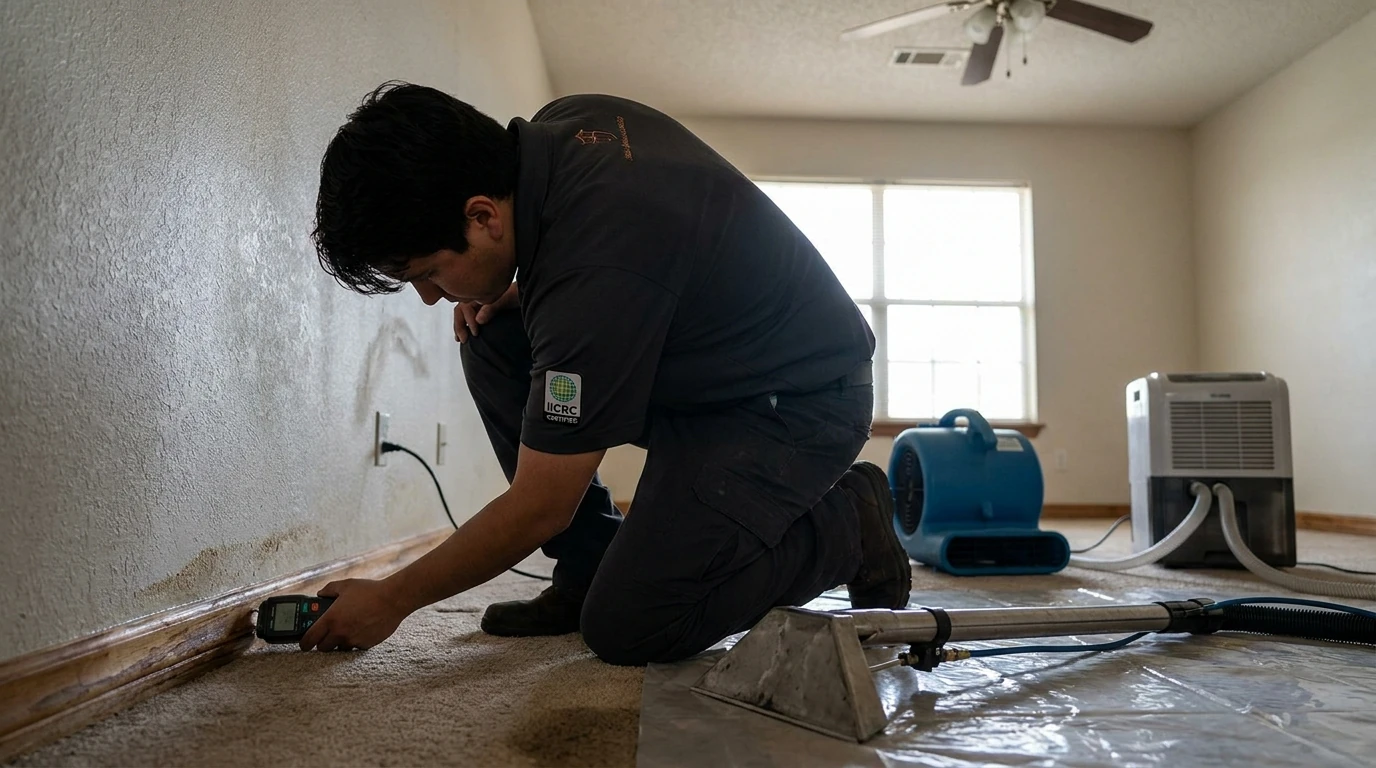
A restoration dispatcher asks a few quick questions, the water source, how long it’s been running, and which rooms are affected, then sends a technician with extraction equipment and moisture meters. On arrival, the crew extracts standing water, checks moisture levels in walls and flooring with a meter (not just a visual check, since drywall can look dry while holding water behind it), and sets air movers and a dehumidifier to begin structural drying.
That moisture-meter documentation matters later: it’s the record that shows an insurance adjuster exactly what got wet, how wet, and when drying started. You can read more about what the full process looks like, from extraction through monitoring, on our water damage restoration page.
When should insurance get involved?
Call your insurance carrier after mitigation has already started, not before, so drying doesn’t sit delayed while you’re on hold. Most homeowners’ policies require you to act quickly to limit the damage, and a restoration crew’s photos and moisture readings become the documentation your claim is built on.
Keep the claim number and your policy’s deductible handy once a crew is on site; they can usually tell you, in plain terms, whether what they’re seeing looks like a covered sudden loss (like a burst pipe) versus a gradual issue (like a slow roof leak) that your policy may treat differently.
If you’re standing in water in Midland, Odessa, Big Spring, or anywhere nearby right now, the fastest path forward is the same no matter the hour: call ACS Enterprise at (432) 847-4704 and get extraction equipment moving before the drywall and subfloor absorb any more than they already have.
FAQ
Who should I call first for water damage restoration in Midland? Call a licensed, 24/7 restoration company before you call anyone else, including your insurer. In Midland, that number is (432) 847-4704, which dispatches for extraction and drying any time, day or night, so water doesn’t sit any longer than it has to.
Should I call my insurance company before or after the water is removed? Call after mitigation has started. Most policies expect you to limit damage quickly, and a restoration crew’s photos and moisture readings give the adjuster the documentation needed to process the claim, rather than you trying to describe standing water over the phone.
What’s the real difference between a plumber and a water damage restoration company? A plumber repairs or replaces the failed pipe, valve, or fixture. A restoration company handles everything the water touched after that: extracting standing water, drying wet framing and flooring, and monitoring moisture levels until the structure reads dry, which a plumber’s visit doesn’t cover.
How fast does drying actually need to start? As soon as possible. The EPA notes mold can begin growing within 24 to 48 hours on wet materials, so the gap between water hitting the floor and extraction starting is the single biggest factor in whether drying stays simple or turns into a mold problem too.