If sewage is backing up into your Midland home right now, call ACS Enterprise at (432) 847-4704. ACS Enterprise answers 24/7 and has a 5.0 rating across 367 Google reviews from local cleanup jobs. Whether you also need a plumber or the City of Midland depends on where the backup is coming from, and that’s the first thing to figure out.
Do I call a plumber, the City of Midland, or a restoration crew first?
Do both the cleanup call and the line call the same day: call a licensed plumber (or the City of Midland, if more than one fixture is backing up) to stop the source, and call a sewage cleanup crew to handle whatever has already reached your floors, carpet, or crawlspace.
These are two different jobs. A plumber or the city clears the blockage. A restoration crew removes the contaminated water, disinfects the affected materials, and dries the structure so mold and odor don’t set in behind the walls. One without the other leaves you exposed, either the line backs up again or the sewage sits long enough to soak into subfloors and drywall.
If the backup is still actively rising, a single fixture overflowing (usually a toilet) points to a private line clog, which is a plumber’s job. If the lowest drain in the house, a floor drain, a basement drain, or a utility sink, is pushing up sewage while multiple fixtures gurgle at once, that’s often the city main, and Midland’s utility department needs the call.
How do I know if it’s my line or the city’s main?
In Midland, the sewer line from your house to the property line, or to the city’s main in the street, is your responsibility. From that connection point outward, it’s the city’s. A clogged private lateral usually shows up as one slow or backed-up fixture; a main line problem usually shows up as several fixtures backing up at once, often starting with the lowest drain in the house.
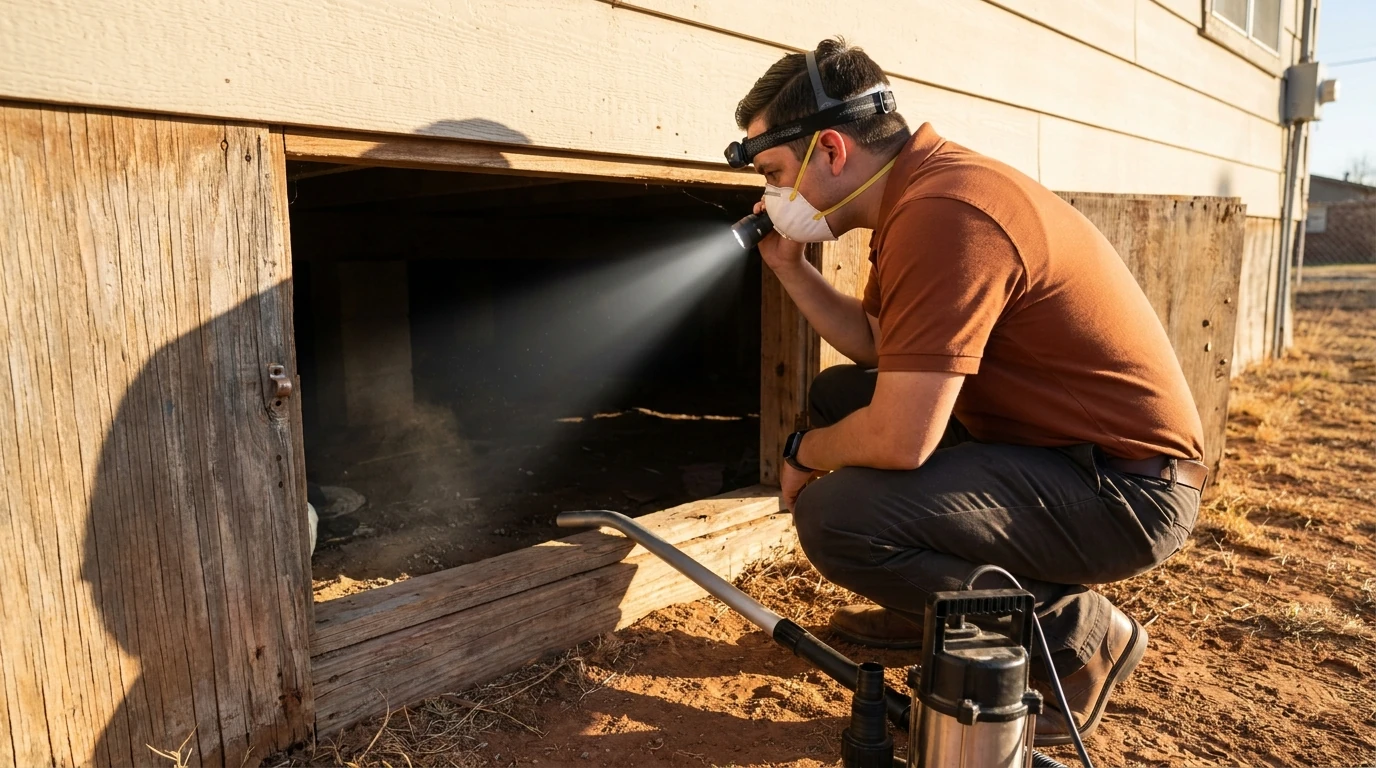
Older pier-and-beam homes around Midland complicate this. If your house sits on piers with a crawlspace underneath, a lateral break under the house can push sewage into the crawlspace without ever showing up as a visible backup indoors. If you smell sewage under the house, notice damp soil through a foundation vent, or see standing water through a crawlspace access door, treat it as an active backup even if nothing inside has overflowed yet.
When you’re not sure which line is at fault, call the plumber first. A plumber can usually tell within minutes whether the clog is on your side or the city’s, and hand you off to the right department if it isn’t.
What do I do in the first hour?
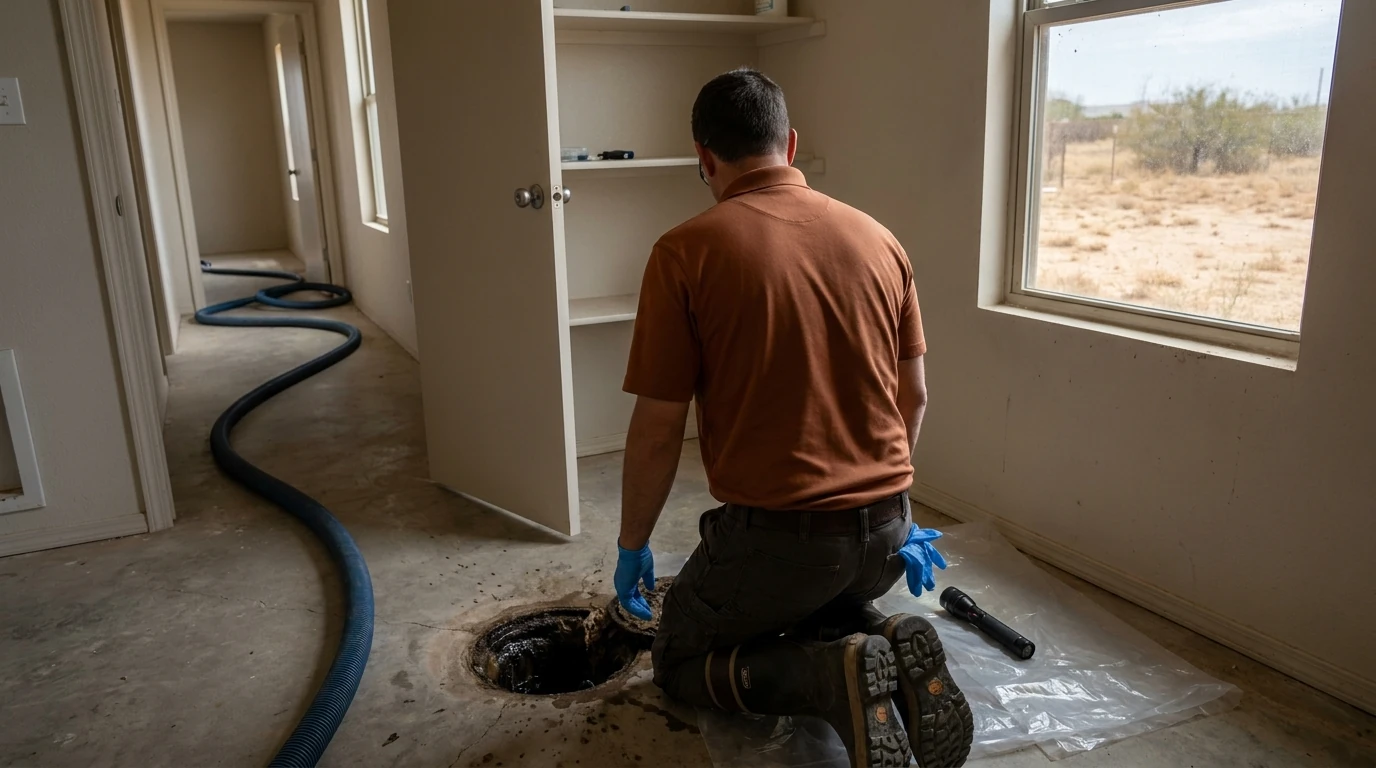
Stop using every drain and toilet in the house until the source is identified. That single step prevents a bad backup from becoming a flooded one.
If a toilet is actively overflowing, shut off the water supply valve at its base (turn it clockwise) rather than flushing again. Keep kids and pets out of any room with standing water or wastewater odor; sewage backups carry Category 3 water, also called black water, under the IICRC S500 standard, and it’s not something anyone should wade through. Don’t run the dishwasher, washing machine, or any other drain-connected appliance until you know whether the problem is isolated to one fixture or the whole system.
If the water has already reached carpet, baseboards, or a crawlspace, that part of the job belongs to a cleanup crew, not a mop and a bucket. Sewage that sits for more than a few hours starts soaking into porous materials in ways a wet-vac can’t fully reach.
What happens when you call ACS Enterprise?
Have a few details ready when you call: which fixtures are affected, how long it’s been backing up, and whether you’ve already reached a plumber or the city. That lets the crew show up prepared for the right scope of work.
On arrival, the crew identifies the water category and class, extracts standing sewage, and removes any flooring, drywall, or insulation that’s too contaminated to clean and dry in place. Salvageable materials get dried and disinfected to the same IICRC S500 standard that governs professional water losses, with documentation for your insurance adjuster along the way. For a pier-and-beam crawlspace, that usually means extraction equipment staged at the access door and a thorough check for pooled water across the whole underside of the house, not just the spot nearest the leak.
Is a sewage backup actually a health hazard?
Yes. Raw sewage can carry bacteria, parasites, and viruses, and the CDC’s guidance on cleaning safely after a disaster is clear that contaminated water needs protective equipment and proper disposal, not a DIY mop job. For the full breakdown of what’s actually in that water and why it’s not a weekend project, see why you can’t DIY a sewage backup.
A sewage backup in a Midland home is never a one-call problem: it’s a line call and a cleanup call, usually on the same day. Getting the order right, plumber or city first if the backup is still flowing, cleanup crew the moment contaminated water has touched your floors, keeps a bad afternoon from turning into a mold problem three weeks later. Call ACS Enterprise at (432) 847-4704 to get a crew started on the cleanup side while you sort out the source.