
Water Leak Detection in Midland
Water leak detection in Midland and surrounding areas. Insurance billing accepted. Call (432) 847-4704.
Water bill climbed for no reason you can explain, or there’s a damp patch on the slab that never quite dries? That’s usually a hidden leak, not a one-time spill, and it rarely announces itself the way a burst pipe does. Water leak detection finds the source before it turns into a flooring tear-out, a mold conversation with your insurer, or a foundation problem. ACS Enterprise uses non-invasive detection equipment to locate the leak first, so any repair or cleanup that follows is aimed at the actual problem instead of a guess.
What water leak detection actually involves
Most hidden leaks fall into a few categories: a slab leak under the foundation, a supply line leaking inside a wall cavity, or a fitting failure behind a shower surround or under a slab-on-grade kitchen. None of these show up as an obvious puddle. What you notice instead is a warm spot on tile, a hiss behind drywall, a musty smell in one room, or a water meter that keeps spinning with every fixture in the house shut off.
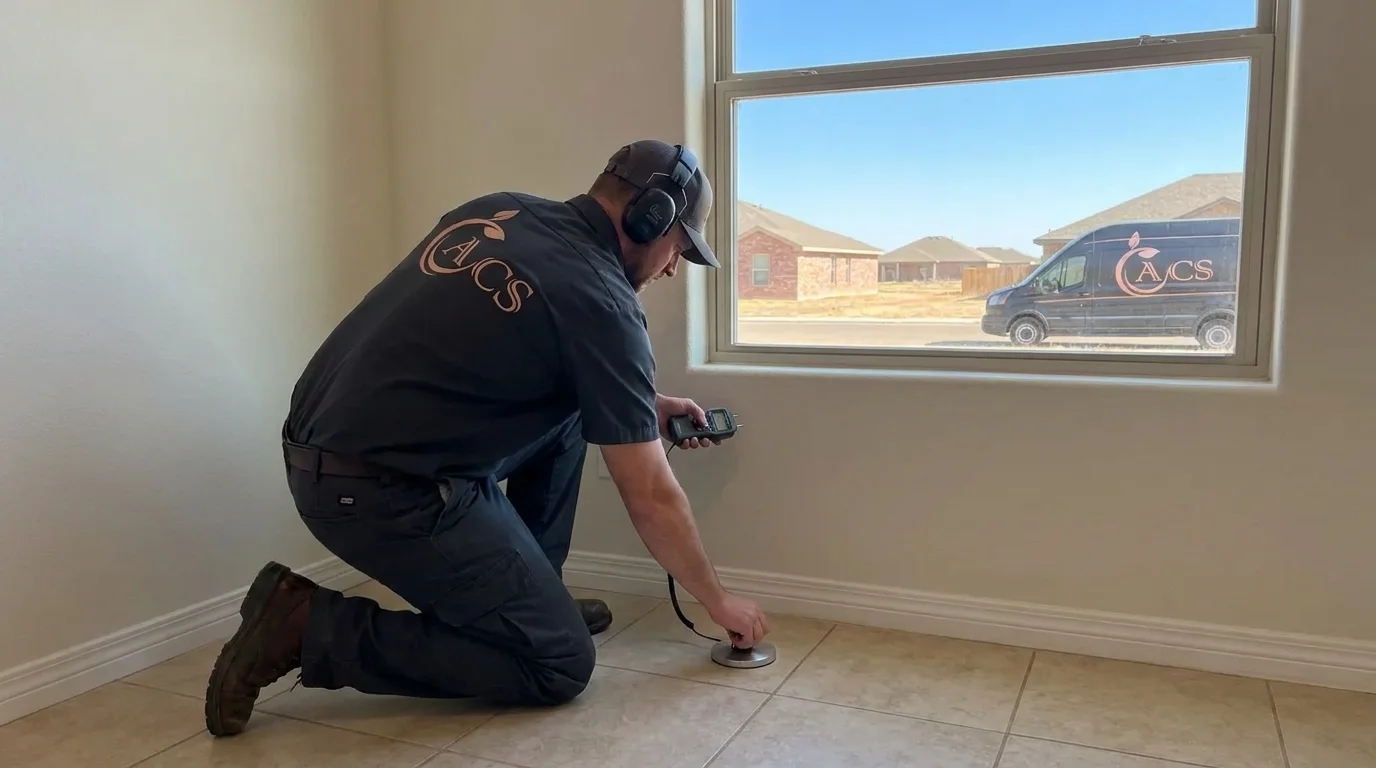
Detection work uses acoustic listening equipment that picks up the sound of pressurized water escaping a line, infrared thermal imaging that reads temperature differences in a wall or slab, and moisture meters that confirm where materials are actually wet versus just humid. For suspected slab leaks, that often means isolating sections of the plumbing system and pressure testing them one at a time until the leaking line is identified. None of this requires opening walls or jackhammering concrete to find the leak, that part only happens once the location is confirmed.
Our process
- Interview and visual inspection. We start with what you’ve already noticed: the water bill, the sound, the damp spot, which fixtures were running. That narrows the search before any equipment comes out.
- Non-invasive scanning. Acoustic sensors and thermal imaging map the likely path of the leak along walls, under flooring, or across a slab without cutting anything open.
- Pressure isolation testing. For suspected slab or in-wall supply line leaks, sections of the system are isolated and tested under pressure to confirm which line is losing water and roughly where.
- Pinpointing and marking. Once the data from acoustic, thermal, and pressure testing lines up, the leak location is marked on the surface, typically within a small, defined area rather than a vague zone.
- Written findings before any cutting. You get a scope of what was found and where, so a plumber or restoration crew knows exactly what they’re opening up, and so the documentation exists if you end up filing a claim.
What separates a good leak detection response from a bad one
The most common mistake is skipping straight to exploratory demolition, cutting drywall or breaking slab in the general area where water showed up on the surface. Water travels along studs, under subfloor, and through slab cracks before it ever surfaces, so the wet spot on your ceiling or floor is often several feet from the actual source. Opening the wrong section means more repair cost and the leak keeps running the whole time.
A second issue is stopping the search too early. A single confirmed leak doesn’t rule out a second one, especially in older copper systems where corrosion is happening system-wide, not just in one spot. Good detection work checks the full line, not just the segment closest to the symptom.
Insurance adjusters generally want to see documentation that the leak was located using equipment, not assumption, along with photos, moisture readings, and a clear timeline. That paperwork matters more than people expect when a claim involves hidden or gradual water loss, since carriers scrutinize those claims more closely than a sudden pipe burst.
What does water leak detection cost?
Typical costs for leak detection vary with how accessible the suspected leak is and whether it’s a straightforward supply line or a slab leak requiring pressure isolation across multiple zones. Every property and plumbing layout is different, which is why ACS Enterprise provides a written scope of the detection findings before any cutting, repair, or water damage mitigation begins. Homeowners insurance typically covers the resulting water damage if the leak was sudden and accidental, but detection and plumbing repair costs themselves are often treated separately from the mitigation claim, so it’s worth confirming with your carrier.
| Scenario | Typical range |
|---|---|
| Basic leak detection visit, accessible plumbing | $150 - $400 |
| Slab leak detection with pressure isolation | $300 - $800 |
| Wall or ceiling leak detection with thermal imaging | $250 - $600 |
| Whole-system leak survey, multiple suspected zones | $500 - $1,200 |
| Detection combined with moisture mapping for a claim | $400 - $900 |
Seasonal & regional considerations
Clay soil common across the Permian Basin expands and contracts with moisture swings, which puts ongoing stress on slab plumbing and can turn a small pinhole leak into a shifting slab crack over time. Hard freezes are infrequent in Midland but not unheard of, and a pipe that cracks during a cold snap may not leak visibly until temperatures rise and the ice plug melts, which is why some leaks seem to “appear” days after a freeze event.
Service area
ACS Enterprise handles water leak detection for homeowners and property managers in Midland and the surrounding communities, including homes on both older copper systems and newer PEX plumbing common in recent construction around the area.
If something feels off with your water usage or you’ve noticed a spot that won’t dry, don’t wait for it to get worse. Call (432) 847-4704 to schedule a leak detection visit and get a clear answer on what’s actually happening behind your walls or under your slab.
Frequently Asked Questions
Does homeowners insurance cover water leak detection?
How do you find a slab leak without tearing up the floor?
What are the signs of a hidden water leak in a wall?
How long does a leak detection visit take?
Should I call a plumber or a leak detection service first?
Looking for the best water leak detection company in Midland?
ACS Enterprise provides water leak detection in Midland, TX and the surrounding area, and has served local property owners since 2019. Customers rate us 5.0 out of 5 stars across 367 Google reviews. We answer calls 24/7 — call (432) 847-4704 for immediate help.
Need Water Leak Detection now?
We respond 24/7 across Midland and surrounding TX cities.
Related Coverage
- Our Restoration Services
- Emergency Water Damage Restoration in Midland
- Emergency Burst Pipe Cleanup and Repair in Midland
- Emergency Ceiling Water Damage Repair in Midland
- Contact ACS Enterprise
- Restoration Services in Andrews
- Restoration Services in Big Lake
- Restoration Services in Big Spring
- Restoration Services in Crane
- Restoration Services in Garden City
- Restoration Services in Gardendale
- Restoration Services in Goldsmith
- Restoration Services in Greenwood
- Restoration Services in Imperial
- Restoration Services in McCamey
- Restoration Services in Monahans
- Restoration Services in Odessa